



Angel Naval’s articles from MGO CPA LLP are most popular:
- within Media, Telecoms, IT and Entertainment topic(s)
MGO CPA LLP are most popular:
- within Criminal Law, Technology and Family and Matrimonial topic(s)
Key Takeaways:
- Marketing, advertising, and PR firms face unique cash flow
challenges due to front-loaded expenses, long client payment
cycles, and talent-heavy costs.
- Accounting practices like revenue recognition under ASC 606,
deferred revenue, and subcontractor obligations directly affect
your liquidity picture.
- Proactive strategies — from rolling forecasts to billing
discipline and aligning payables with receivables — can help
you strengthen your cash position and plan with confidence.
—
Cash flow management is one of the biggest
challenges marketing, advertising, and public relations (PR)
firms face. Even when you’re profitable on paper, you can
feel cash-strapped if inflows don’t arrive in time to meet
outflows. Unlike other industries with predictable payment cycles,
your firm operates with a unique set of financial dynamics that
make liquidity harder to manage.
For example, you may find your business juggling:
- Hybrid revenue models: Retainers provide
steady income, but one-off campaigns, event-based projects, and
media buys can swing your cash position quickly.
- Front-loaded expenses: You often pay for
creative development, freelancers, subcontractors, or media
placements before billing your client.
- Long payment cycles: Net 60 or longer terms
— paired with client procurement processes — delay your
inflows.
- Talent-heavy costs: Salaries, bonuses, and
freelance support represent a significant portion of your expenses,
requiring consistent outlays regardless of client collections.
The result? Cash often goes out the door long before it comes
in. Without thoughtful planning, these mismatches can put strain on
your operations, even when projects are profitable.

Accounting Considerations That Impact Cash Flow
Managing liquidity isn’t just about sending invoices faster.
Your accounting practices play a direct role in how well you can
anticipate and respond to cash shortfalls. To keep your financial
picture clear and avoid unpleasant surprises, you’ll want to
pay close attention to these key accounting factors:
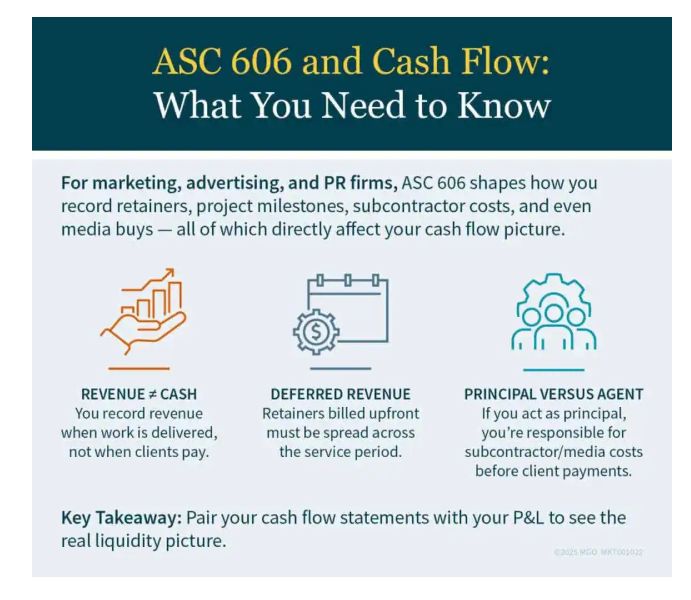
1. Revenue Recognition Versus Cash Receipts
Under ASC 606 (the accounting standard for how and
when you recognize revenue from contracts with clients), you
recognize revenue when performance obligations are satisfied
— not when your client pays you. This can leave you in a
position where your income statement looks strong, but your bank
account tells a different story. Monitoring accounts receivable and
cash flow statements alongside revenue reporting is critical.
2. Project Costs and Work in Progress (WIP)
Major expenses — freelancers, production crews, or media
placements — often hit your books before client invoices are
sent. Without proper accruals and WIP accounting, you may
underestimate your true cash exposure and risk overspending early
in a project.
3. Deferred Revenue From Retainers
Many of your retainer agreements are billed upfront, but
accounting standards require you to recognize that revenue as the
related services are delivered over the contract period. This
timing difference can create a misleading picture: your bank
balance looks healthy, but your income statement may not reflect
those funds yet. Without careful tracking, this can mask both
liquidity risks and actual performance.
4. Subcontractor and Media Payables
If your firm acts as a principal under ASC 606, you’re
responsible for paying subcontractors and media outlets —
even if your client hasn’t yet paid you. Unless you align your
payables schedule with your receivables, these obligations can
quickly erode your working capital.
Strategic Cash Flow Practices for Creative Firms
To manage liquidity proactively, you need more than general cash
management strategies — you need tools tailored to the unique
flow of your business. These best practices can help you smooth
timing mismatches, strengthen your cash position, and build
confidence in your planning:
1. Build a Rolling 13-Week Cash Forecast
Short-term forecasting helps you anticipate crunch points and
make tactical adjustments, such as delaying discretionary spending
or accelerating billing. Updating this weekly gives you visibility
into near-term risks and opportunities.
2. Segment Forecasts by Client and Revenue
Type
Not all revenue behaves the same. Retainers bring stability,
while campaign-based work can be unpredictable. Forecasting by
segment helps you model different inflow patterns and identify
where cash gaps may arise.
3. Strengthen Billing and Collections
Discipline
Tighten invoice cycles, confirm client procurement requirements
upfront, and follow up on overdue accounts consistently. Even small
improvements in days sales outstanding (DSO) can free up
significant cash.
4. Use Scenario Planning and Burn Rate
Analysis
Model “what-if” scenarios — such as late client
payments, project delays, or unexpected expenses — so you
know how long your available cash can support operations. This
stress testing helps you plan contingency measures before a crisis
hits.
5. Align Accounts Payable With Receivable
Timing
Negotiate terms with subcontractors, freelancers, and media
vendors to better match when you collect from clients. Structuring
payments this way can reduce the strain of front-loaded costs.
Turning Cash Flow Stress Into Improved Operational
Stability
Cash flow challenges are part of the reality of running a
marketing, advertising, or PR firm — but they don’t have
to dictate your future. By tightening your accounting practices and
adopting proactive forecasting, you can turn cash flow from a
constant source of stress into a strategic advantage. And if gaps
remain, having the right advisors by your side can give you the
clarity and confidence to navigate them.
The content of this article is intended to provide a general
guide to the subject matter. Specialist advice should be sought
about your specific circumstances.
link