
The UK’s advertising and marketing industry isn’t London-centric anymore – it’s ‘booming’ up North
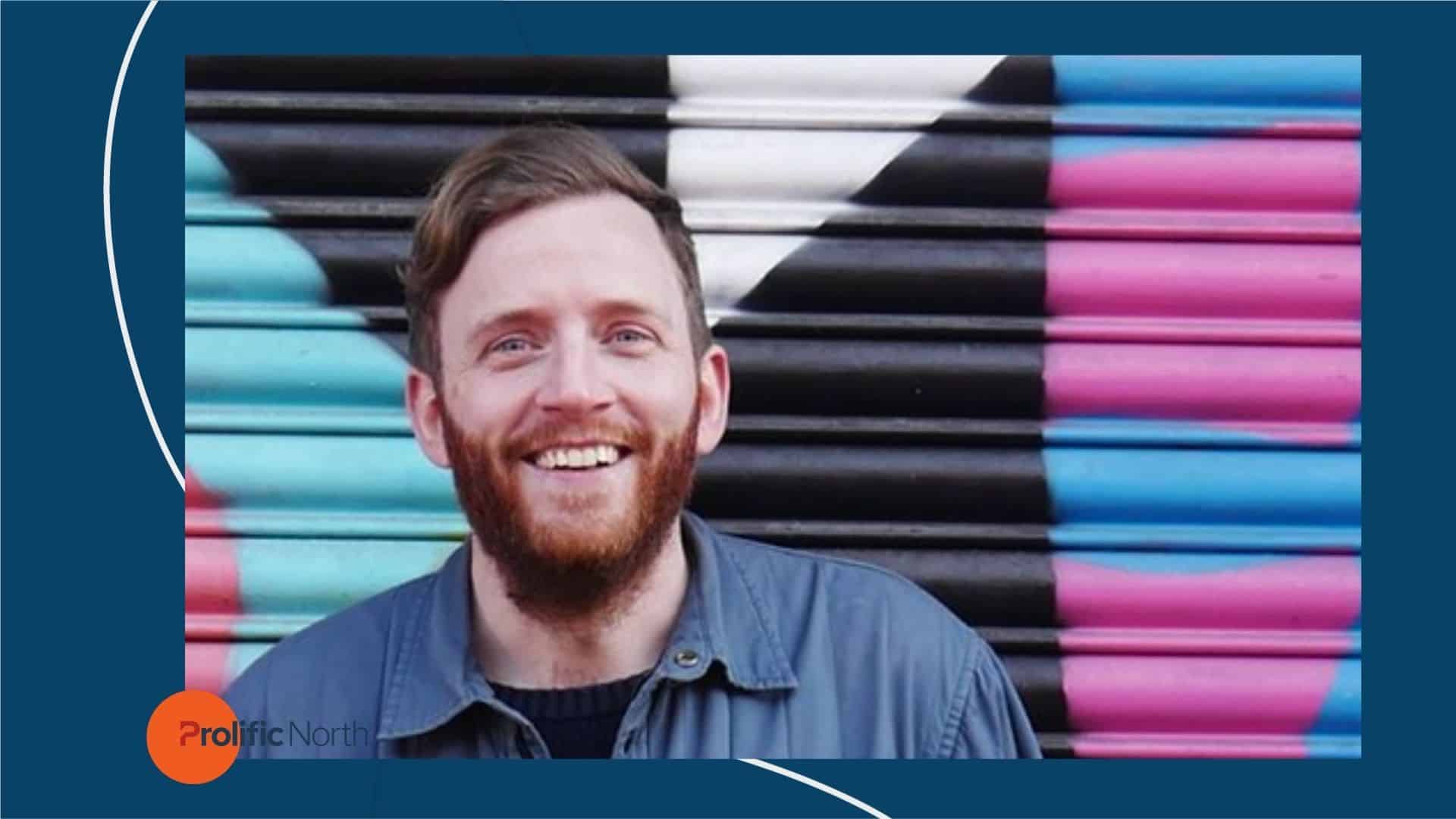
After an eight-year hiatus teaching primary school children in inner-city Bradford, Matt Rennie has returned to his creative roots.
Appointed as head of creative at Leeds-based agency Perfect Storm earlier in 2025, he’s since discovered how the industry looks radically different from the one he left behind.
“It really was London-centric and inaccessible,” he tells Prolific North. “Now, it has really boomed.”
And he’s right. A recent report from advertising think tank Credos reveals that 60% of UK advertising and marketing jobs are now based outside the capital.
As part of Prolific North’s Creative Powerhouse campaign series designed to shine a spotlight on the talent, triumphs, tensions and untapped potential across the North’s creative industries, Rennie reflects on the sector’s transformation and shares why creatives no longer need to head south to launch their careers.
READ MORE: Unveiling Prolific North’s deep dive series into the North’s creative industries
Back in Rennie’s own student days, despite completing an engineering degree he knew it wasn’t where his passion was. He took matters into his own hands and crafted a video CV to try and get his foot into the creative world.
“I landed loads of interviews. I ended up doing what everyone had to do at that time, which was to go down to London and sleep on my mate’s sofa for six months and build up a portfolio.
“It really was London-centric and inaccessible. When I was starting out, I didn’t know who to go to, to get advice or point me in the right direction. I was even turned down for expenses during an interview for an internship at a big agency in London. So I left the interview. The next generation coming through are less likely to stand for that anymore.”
His efforts paid off. After cutting his teeth in the capital, he eventually made his way back North, landing at creative agency Finn, where he climbed the ranks to become creative director, working with big-name brands like Yorkshire Tea.
“We were doing a campaign in schools and my mum was a teacher, and I felt like I really wanted to try it out,” he explains.
“I didn’t think the industry, which was still London-centric at the time, was going to change and I wanted to stay where my family and friends were. So I decided to leave the creative industry and retrain as a teacher.”
“It’s definitely changed…”
During his time in the classroom, it wasn’t just a learning experience for his students. Rennie saw first-hand how young people’s attitudes toward creativity were shifting. Unlike his own school days, students are now seeing creative careers as something accessible.
“Throughout my education and time at university, I was put into a box because I was good at maths and physics, and I was encouraged to pursue a career in engineering. I did art at school, but it wasn’t seen as valuable as the other subjects,” he explains.
“It’s definitely changed, probably because a lot of them [students] have phones in their hands and can see what is out there!
“We used to have a career day at school. It was in a council estate in Bradford, so it was all about raising ambition. You don’t have to go and work at your dad’s shop, there’s plenty of other things you can do.
“A shoe designer came in and all the young boys in Bradford were like: ‘Whoa, you can do that for an actual job?’ Teaching has definitely become more creative than when I was at school.”
Despite feeling fulfilled during his stint as a teacher, that lingering “creative itch to scratch” appeared once again.
“Teaching was a really, really hard job. I loved it, don’t get me wrong, but I was spending more time with 30 students than I was spending with my own children – and that felt wrong.”
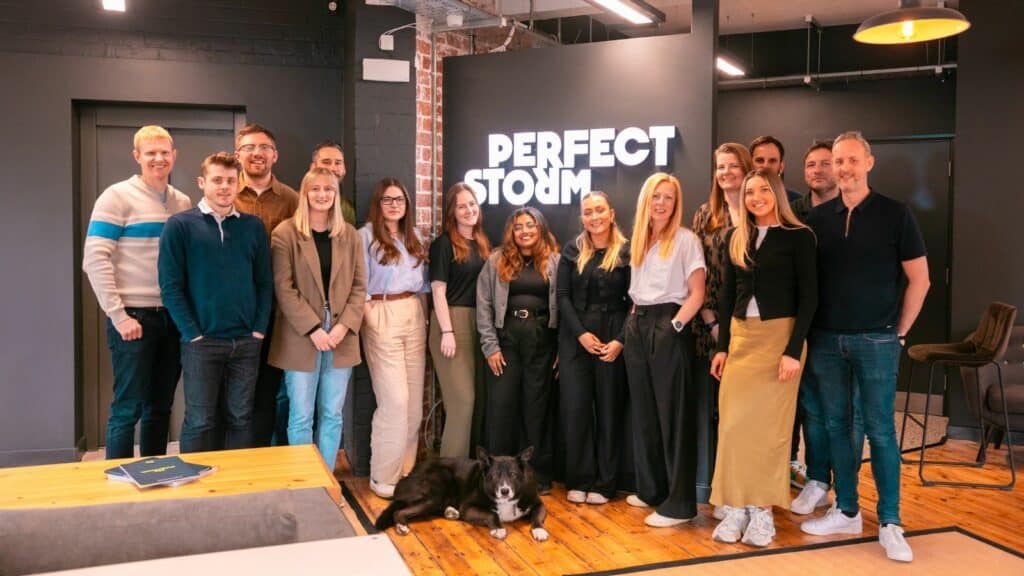
That’s when Perfect Storm came calling. A conversation with the agency’s co-founders Adam Errington and Dave Nutter proved timely, landing him a top role at the fast-growing agency.
“There’s a lot of opportunity now…”
“I can’t believe the number of agencies that exist now, compared to when I left the industry. It has really boomed,” says Rennie, on his surprise at just how much the Northern agency landscape had transformed after eight years away.
“Maybe I’ve just been blind to it, because I’ve had my head down as a teacher, but I’ve come back and it seems like all of these different agencies [across the North] have appeared out of nowhere and they’re all doing really good creative work.
“There’s a lot of opportunity now. If initiatives like School of Thought in Leeds had existed when I left university, I wouldn’t have had to go to London and sleep on a mate’s sofa.”
Although a large chunk of UK advertising and marketing jobs are now based outside of the capital, almost 70% of the creative industries’ UK economic output is still concentrated in London and the South East of England.
“People are trying, they’re making things happen and putting things in place that should have been there, which feels really positive.”
Still, more work needs to be done, particularly around guidance and representation in Northern creative clusters like Hull and Wakefield.
“Initiatives like School of Thought, if money came through to fund that, it would be amazing. It’s all about access. How do you get over the wall and get into the creative industries?” he asks.
“I worked in Bradford for six years, there’s so many people unrepresented. One of our greatest strengths is diversity in the North, so how do we tap into that? And how could funding be used to bring working class people or those from different backgrounds into the industry?
“Because that’s what creativity is about, right? Bringing people together and seeing connections between things. It’s exciting that the government has pledged more money, it’s just hoping that it goes in the right places, and that it meets the needs that are there.”
And the North has a real stake in the future of the industry but only if decision-making follows up here too.
“It’s awesome, people are moving out of London but it’s important that when those people move, the responsibility moves with them as well with decision-making and trust.
“Don’t just move the office, move the power as well.”
And tackling “stereotypes” about the creative industries in the North is just as essential, as creative work that happens up here isn’t just about “grit and graft”.
“We stay close to real life. That doesn’t mean that it’s rough-edged and it’s dark all the time. It means that it can be silly, funny, bold and surprising, grounded in real stories and real people. It gives us a huge range.
“Challenging that stereotype of what the North is, is something that is an opportunity. It’s waiting to be tapped into.”
But he’s also realistic about the challenges. Regional identity can be both “empowering and limiting”.
“It can be a bit of a double-edged sword. On one hand, you’ve got pride and identity, but if you identify too closely with that, you are building a garden wall around yourself.
“The work isn’t regional. It should be universal. Northern work isn’t great for the North. It’s great work.
“It is really hard, because you don’t want it to feel like you’re turning your back on it or you’re embarrassed of it, almost. At Perfect Storm, we don’t call ourselves a Northern or regional agency because of the way our model works.
“We have a core team, then we pull in experts, wherever they may be. Lots of our team are Northern based but if the right person lives in Cornwall, then the right person is in Cornwall.
“I think it’s just important that growth is happening because of ambition and not because of affordability.”
link