Why Proper Hard Drive Disposal Protects Your Business Future
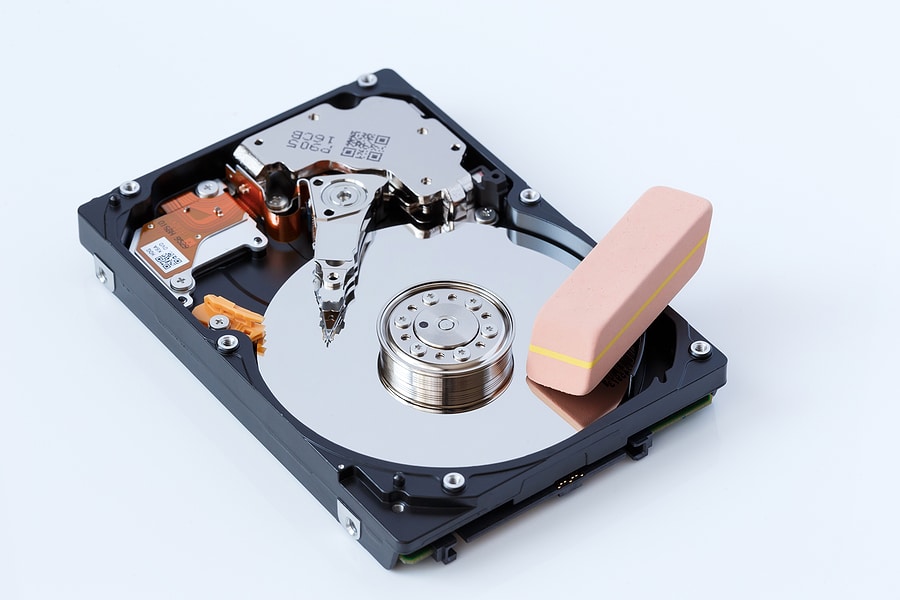
In the intricate ecosystem of modern data management, secure hard disk disposal represents a critical junction where regulatory compliance, environmental stewardship, and corporate security converge. Like the delicate balance observed in natural systems, the proper handling of obsolete storage devices requires methodical attention to interconnected concerns, each component influencing the integrity of the whole. To understand this process fully, one must examine not merely the mechanical acts of destruction but the broader implications that radiate from each decision point.
The Architecture of Data Persistence
Consider the nature of digital storage through the lens of observation. When files are deleted from a hard drive, the casual user assumes complete erasure. Yet this assumption betrays a fundamental misunderstanding of how magnetic storage functions. The data remains encoded in the drive’s magnetic domains, merely marked as available space rather than truly eliminated. This phenomenon mirrors certain biological processes where traces persist long after apparent removal. Professional data recovery specialists can retrieve information from drives thought to be wiped clean, extracting corporate secrets, customer records, and proprietary intelligence with relative ease.
Section 24 of Singapore’s Personal Data Protection Act recognises this vulnerability explicitly, requiring organisations to “make reasonable security arrangements to protect personal data in its possession or under its control, in order to prevent unauthorised access, collection, use, disclosure, copying, modification, disposal or similar risks.” The law understands that disposal itself constitutes a point of particular hazard.
Methodologies of Secure Hard Drive Disposal
Through systematic study, three primary methodologies have emerged as effective approaches to secure hard drive disposal, each suited to particular circumstances and security requirements.
Degaussing employs powerful electromagnetic fields, typically exceeding 7,000 Oersteds in intensity, to disrupt the magnetic domains that store data on traditional hard disk drives. This process renders information permanently irretrievable by scrambling the magnetic patterns beyond any possibility of reconstruction. The method proves remarkably efficient for processing multiple drives simultaneously, making it ideal for organisations managing large quantities of obsolete equipment. However, one must note a critical limitation. Degaussing affects only magnetic media. Solid-state drives, which store data through electrical charges in flash memory cells, remain unaffected by magnetic fields and require alternative treatment.
Physical destruction through industrial shredding represents the most absolute form of data elimination. Purpose-built machines reduce hard drives to fragments measuring 5mm or smaller, destroying both the physical platters and the data they contain. This method accommodates all storage types, including solid-state drives, and provides visual confirmation of complete destruction. The resulting materials can be processed for recycling, recovering valuable metals whilst ensuring zero possibility of data reconstruction.
Data wiping software follows established protocols such as NIST SP 800-88 or DoD 5220.22-M, overwriting existing data with patterns of zeros and ones multiple times. This technique suits functional drives destined for refurbishment or resale, allowing equipment reuse whilst protecting confidential information. Yet certain conditions diminish its effectiveness:
- Damaged or malfunctioning drives may contain sectors inaccessible to overwriting software
- Advanced forensic techniques can occasionally recover traces from incompletely wiped drives
- The process requires significant time investment for thorough completion
- Verification of successful erasure demands additional technical scrutiny
Regulatory Framework and Certification Standards
Singapore’s regulatory environment for secure hard disk disposal reflects sophisticated understanding of interconnected risks. The National Environment Agency licenses facilities handling electronic waste, ensuring proper treatment of hazardous materials including lead, mercury, and cadmium present in storage devices. The Singapore Standard SS 587 provides voluntary guidelines for managing end-of-life ICT equipment, emphasising environmentally responsible practices alongside security protocols.
International certifications complement local requirements. ISO 27001 establishes information security management standards, whilst compliance with NIST and DoD specifications ensures data destruction meets rigorous benchmarks. Professional service providers maintain these certifications through regular audits, documenting their processes and providing certificates of destruction that satisfy regulatory requirements.
The Chain of Custody Consideration
Observing the full lifecycle of hard drive disposal reveals the importance of maintaining secure custody throughout the process. Transportation from client premises to destruction facilities presents vulnerability points where devices might be intercepted or mishandled. Reputable providers employ:
- GPS-tracked vehicles for equipment transport
- Tamper-evident containers for storage media
- Documented chain of custody recording each handling step
- On-site destruction options eliminating transportation risks entirely
- Witnessed destruction services allowing client verification
Environmental Dimensions
The disposal of storage devices intersects with broader environmental imperatives. Hard drives contain both toxic substances requiring careful handling and valuable materials suitable for recovery. Responsible hard disk disposal practices extract precious metals including gold, silver, and platinum for reuse in new manufacturing, reducing demand for virgin mining operations. This circular approach aligns with Singapore’s Zero Waste Masterplan and its commitment to extending the lifespan of Pulau Semakau landfill beyond 2035.
The Imperative of Professional Management
The complexity of secure storage device disposal exceeds the capabilities of most internal operations. Organisations attempting self-managed destruction often lack specialised equipment, trained personnel, and comprehensive understanding of regulatory requirements. Data breaches resulting from improper disposal can cost Singapore businesses an average of S$7.17 million, a figure that dwarfs the expense of professional services. The prudent approach engages certified providers who maintain NEA licensing, ISO certifications, and documented processes, transforming potential liability into verified compliance through methodical application of proven secure hard disk disposal protocols.